How to Execute a Flawless FAT, Installation, and Commissioning for Polymer Extrusion and Polymerization Equipment
October 31, 2026
Factory Acceptance Testing (FAT), installation, and commissioning form the critical triad that determines the operational success of industrial polymer processing lines. When chemical plants and extrusion facilities invest in complex assets like an XPS Board Production Line or an advanced MS Polymerization Plant, avoiding costly startup delays requires strict engineering discipline. A structured execution plan prevents catastrophic equipment failures, ensures compliance with international safety codes, and guarantees that throughput matches design specifications before commercial production begins. Plant engineers and project managers must navigate these validation phases with meticulous precision to protect capital investments and secure long-term operational profitability.
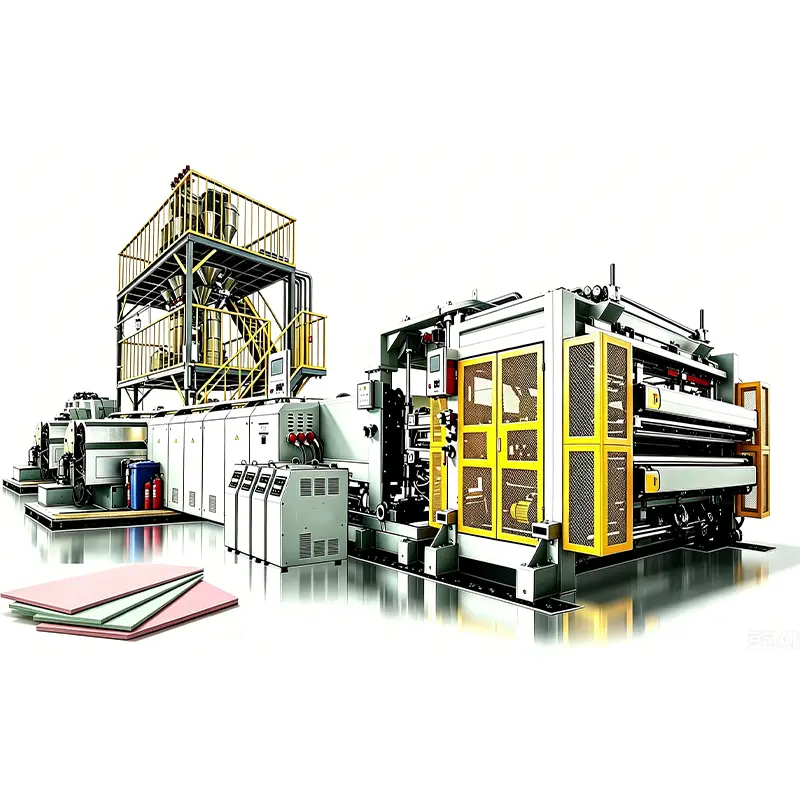
1. Defining Factory Acceptance Testing (FAT) Objectives and Verification Protocols
Factory Acceptance Testing validates that manufactured polymer equipment conforms strictly to engineering design specifications, contractual agreements, and international industrial standards before shipment from the manufacturing facility. This controlled validation phase gives plant operators and engineering teams the opportunity to inspect mechanical integrity, control system logic, and auxiliary sub-assemblies without the logistical complexities of a live factory floor.
Clear verification protocols eliminate ambiguity during equipment handover. The testing team verifies dimensions, metallurgy certifications, pressure vessel welds, and electrical panel layouts against approved engineering drawings. For intricate machinery such as the Supercritical CO2 Foaming XPS Production Line, testing protocols must check high-pressure vessel integrity, precise dosing pump calibrations, and proprietary gas injection manifold tolerances.
| Inspection Phase | Primary Verification Focus | Standard Acceptance Criteria |
| Mechanical Check | Dimensional accuracy, weld integrity | ASME / ISO compliance certificates |
| Electrical & Control Test | PLC logic, interlocks, E-stop response | Zero wiring faults, IEC standards |
| Functional Dry Run | Motor rotation, sensor feedback | 4-hour continuous unloaded operation |
Table 1: Standard Factory Acceptance Testing (FAT) Verification Matrix for Industrial Polymer Equipment.
Executing these rigorous checks at the vendor site saves weeks of on-site troubleshooting. Mechanical alignment issues or PLC logic bugs identified during FAT undergo immediate correction before freight dispatch, reducing project schedule risks.
2. Pre-Installation Site Preparation and Foundation Engineering
Site preparation lays the physical and structural groundwork required to support heavy polymer processing machinery. Industrial extruders, polymerization reactors, and pelletizing units generate massive dynamic loads, thermal expansion forces, and vibrational stresses that demand engineered foundation designs.
Civil engineering teams must pour reinforced concrete pads conforming strictly to load-bearing calculations provided in vendor layout drawings. Anchorage points, embedded steel plates, and trench layouts for cooling water, electrical cabling, and polymer melt piping require precise leveling.
- Verify floor flatness tolerances using laser leveling equipment to prevent frame distortion in long extrusion barrels.
- Confirm overhead crane clearance limits and doorway dimensions for safe rigging and placement of heavy modular sub-assemblies.
- Establish dedicated utility drop points for cooling water loops, compressed air headers, nitrogen purging lines, and high-voltage power supplies.
- Install environmental controls within the plant building to manage ambient temperature and humidity for sensitive electrical enclosures.
Completing these civil and utility prerequisites before equipment delivery prevents idle contractor hours and ensures a smooth mechanical positioning phase.
3. Mechanical Installation, Rigging, and Component Alignment
Mechanical installation translates 2D plant layouts into a functional, three-dimensional production facility. Rigging heavy machinery requires certified personnel, calibrated cranes, and adherence to strict load-chart protocols to prevent structural damage to delicate gearboxes, extrusion screws, and reactor vessels.
Precision alignment stands as the single most critical factor in preventing premature wear on high-torque drive trains. Technicians utilize laser alignment tools to align motor shafts with extruder gearboxes, maintaining angular and parallel tolerances within fractions of a millimeter. Misalignment accelerates bearing fatigue, creates excessive heat, and leads to catastrophic coupling failures during high-speed operation.
Piping installation for polymer melts, thermal oil heating systems, and high-pressure blowing agents demands clean-room standards. Welders employ inert gas backing (purge welding) on stainless steel process lines to prevent internal oxidation and contamination that degrades high-purity polymer streams. Every flanged connection requires torquing to exact manufacturer specifications using calibrated torque wrenches, followed by hydrostatic or pneumatic pressure testing before insulation installation.
4. Electrical Integration, Instrumentation Calibration, and Safety Interlocks
Electrical integration connects the physical machinery to the distributed control system (DCS) or programmable logic controllers (PLC). Technicians route signal cables through dedicated trays, separating high-voltage power lines from low-voltage instrumentation cables to eliminate electromagnetic interference (EMI).
Instrumentation calibration ensures accurate data acquisition across all temperature zones, pressure transducers, melt flow meters, and level sensors. Operators calibrate thermocouples and pressure gauges against NIST-traceable standards to maintain tight thermal control profiles required during polymer extrusion and reaction phases.
Safety interlock verification represents a non-negotiable step in the commissioning workflow. Engineering teams systematically test emergency stop circuits, rupture disks, pressure relief valves, and barrel guard safety switches. Simulating fault conditions—such as cooling water failure, motor overload, or excessive reactor pressure—confirms that the control system safely shuts down operations and vents hazardous energy before personnel are endangered.
Ready to upgrade your polymer processing capabilities? Contact our engineering team today to discuss customized equipment solutions for your facility.
5. Cold Commissioning, Dry Runs, and Sub-System Testing
Cold commissioning tests individual sub-systems without process materials, verifying mechanical readiness and electrical responsiveness. Technicians power up lubrication pumps, hydraulic power units, and cooling water skids individually, checking for fluid leaks, abnormal vibrations, and correct rotational directions.
Extrusion screws undergo slow-speed rotation dry runs to verify gearbox lubrication flow and monitor motor amperage draws under unloaded conditions. Heating zones across extruder barrels and die heads undergo thermal cycle testing, verifying PID loop tuning and thermocouple response times across operating temperature ranges up to 350 degrees Celsius.
Pneumatic conveying systems, vacuum degassing pumps, and pellet classifiers undergo burst testing and vacuum holding tests. Resolving minor mechanical binding, wiring loose connections, or sensor calibration drift during cold commissioning ensures that the plant is entirely stable before introducing hazardous or expensive polymer raw materials.
6. Hot Commissioning, Performance Testing, and Operator Handover
Hot commissioning marks the transition from mechanical checkout to active polymer processing. Raw polymer resins, masterbatches, and blowing agents are introduced into the system under the direct supervision of commissioning engineers and plant operators.
During this phase, teams adjust temperature profiles, screw speeds, melt pump pressures, and drawdown rates to stabilize product dimensions, density, and tensile strength. Performance testing involves running the production line continuously at rated capacity for 24 to 72 hours, measuring specific energy consumption, scrap rates, and final product quality against guaranteed contractual metrics.
| Commissioning Milestone | Operational Activity | Success Indicator |
| Hot Feed & Melting | Introduce polymer resin to barrel | Stable melt pressure and amperage |
| Extrusion & Foaming / Reaction | Adjust temperatures and additive feed | Uniform cell structure / molecular wt |
| Continuous 72-Hour Run | Full-speed production run | Nominal scrap rate (< 2%) achieved |
Table 2: Hot Commissioning Performance Run Milestones.
Operator handover concludes the commissioning lifecycle. Vendor engineers conduct comprehensive training sessions covering routine startup sequences, emergency shutdown procedures, preventive maintenance schedules, and HMI troubleshooting protocols, ensuring plant staff can independently manage long-term operations.
Frequently Asked Questions
What is the primary difference between FAT and SAT?
FAT (Factory Acceptance Testing) occurs at the equipment manufacturer’s facility before shipping to verify design compliance. SAT (Site Acceptance Testing) occurs at the customer’s plant after installation to confirm that the machinery operates correctly within the local production environment.
How long does the complete commissioning process typically take?
The duration depends on asset complexity. Standard extrusion lines generally require one to two weeks of site commissioning, whereas large polymerization plants may require four to six weeks of integrated testing and tuning.
What documentation is required prior to starting site installation?
Essential documents include approved civil foundation drawings, P&ID diagrams, electrical schematic wiring diagrams, vendor installation manuals, and certified rigging and lifting plans.
About GreenEarth
GreenEarth operates as a multinational trade-and-manufacturing-integrated international corporation specializing in advanced industrial machinery and chemical processing assets. The company delivers robust technological solutions across petrochemical, polymer processing, and advanced manufacturing sectors. Through rigorous quality control, deep engineering expertise, and dedicated global support, GreenEarth empowers industrial enterprises to optimize production efficiency and scale operations sustainably.