What PLC and DCS Controls Should a Polymer Processing Line Include?
October 14, 2026
A polymer processing line needs programmable logic controllers (PLC) for discrete sequence logic and distributed control systems (DCS) for continuous process regulation, plus one supervisory layer that unifies both. PLCs handle step-by-step operations such as motor starting, valve switching and safety interlocks. DCSs manage analog regulation of temperature, pressure and flow across the whole line. The correct mix depends on line scale, product consistency targets and operator staffing. Consider a twin-screw extrusion line producing masterbatch compounds. A PLC drives the feeding sequence, screw speed and cutter cycling. A DCS regulates melt temperature zones, barrel heating and die pressure. Together they hold output tolerances within a few tenths of a percent of setpoint. This article explains the control functions every Polymer Processing Equipment line should include, with practical examples for decision-makers planning a purchase or upgrade.
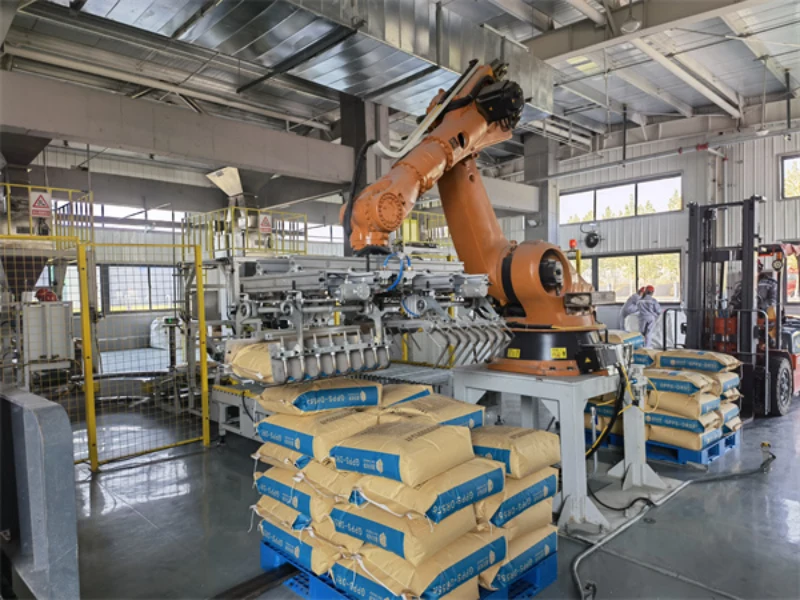
The Difference Between PLC and DCS in Polymer Processing
PLCs and DCSs solve different control problems, even though modern products overlap in capability. A PLC performs fast, deterministic logic on discrete inputs and outputs. It reads limit switches, starts motors and opens valves in a fixed sequence. A DCS distributes analog control across redundant controllers that each supervise a process area. Each controller reads sensors, computes setpoints and writes outputs continuously.
For polymer lines, the distinction maps to the process itself. Compounding, extrusion and pelletizing involve discrete steps plus continuous thermal and hydraulic regulation. A small single-screw line may run reliably on a standalone PLC. A large continuous polymerization train, or a plant with several extrusion lines sharing utilities, benefits from a DCS that coordinates everything. The decision starts with production volume and process continuity.
Manufacturers should also weigh expansion plans. A DCS scales by adding controller nodes without redesigning the logic. A PLC network scales by adding modules or linked processors. Both approaches work, but they carry different engineering, training and spare-part costs. Your control vendor should demonstrate its architecture against your specific line before you commit.
Essential PLC Functions for a Polymer Line
A PLC forms the backbone of machine-level control. It executes the sequence that starts a line, runs the process and stops it safely. The functions below appear on almost every modern polymer processing skid.
Sequence and Interlock Logic
The PLC starts each motor, heater and valve in a defined order. Interlocks prevent unsafe combinations. A screw should not start while a downstream cutter is jammed. An extruder barrel should not heat before cooling water flows. The PLC verifies each precondition before advancing to the next step.
Ladder logic or structured text encodes these rules in a way technicians can trace. The sequence also handles normal shutdown, cleaning cycles and product changeover. A well-written sequence reduces operator errors and shortens transition time between recipes.
Motion and Motor Control
Polymer lines contain many drives. Feeders, screws, gear pumps, haul-off units and cutters all need precise speed control. The PLC commands variable frequency drives over fieldbus or analog signals. Closed-loop speed regulation holds product dimensions stable across the run.
Position control matters for indexing, cutting and winding applications. Servo drives accept position commands from the PLC and return feedback. The PLC coordinates multiple axes so that cutter timing matches line speed automatically. This coordination directly affects pellet length and film thickness consistency.
Safety and Emergency Stop Management
Every line requires a rated safety system. The PLC, or a dedicated safety PLC, monitors emergency stops, guard doors, light curtains and pressure relief devices. When any device trips, the system stops dangerous motion within the required response time.
Safety logic operates independently from production logic. It cannot be bypassed from the operator screen. Plant standards, such as IEC 62061 or ISO 13849, define the performance level you must meet. Document these requirements in your purchase specification.
DCS Functions for Continuous Polymer Operations
Where a PLC manages discrete events, a DCS manages continuous regulation that never stops. Polymer melt conditions change second by second. The DCS corrects them automatically so the product stays within specification.
Temperature Control Loops
Barrel temperature zones, die heads and molds all require closed-loop temperature control. Each zone has a thermocouple, a heater and sometimes a cooling channel. The DCS runs PID algorithms that balance heating and cooling to hold the zone at setpoint.
Polymer melts respond slowly to heat changes. A poorly tuned loop creates overshoot that degrades material properties. Advanced loops use feedforward based on screw speed and throughput. They anticipate load changes and adjust output before the temperature drifts.
Pressure and Flow Regulation
Melt pressure at the die determines product density and dimensional stability. The DCS reads pressure transducers and adjusts screw speed or gear pump speed to hold pressure constant. Flow control governs material feed rate and throughput.
Pressure spikes can damage equipment or create unsafe conditions. The DCS reacts within milliseconds, reducing screw speed or opening a relief path. This fast response protects both product and machine.
Recipe and Batch Management
DCS systems store recipes that define setpoints, ramps and alarm limits for each product. An operator selects a recipe, and the system loads all parameters automatically. This reduces setup errors and ensures repeatable quality between batches.
Recipe management also logs every change. Auditors can see who altered a setpoint, when and why. For food-contact or medical polymer grades, this traceability supports compliance programs and customer quality audits.
Typical Control Loops and Their Signals
The table below summarizes the control loops common on polymer processing lines, the signals each one uses and the typical setpoint. These values serve as guidance, not universal limits.<caption>Table 1: Typical control loops on a polymer processing line and their primary signals</caption>
表格
| Control Loop | Primary Input | Typical Output | Typical Setpoint |
|---|---|---|---|
| Barrel temperature | Thermocouple | Heater power, cooling flow | 180–260 °C |
| Die pressure | Melt pressure transducer | Screw or gear pump speed | 50–200 bar |
| Screw speed | Encoder feedback | Drive frequency | 50–500 rpm |
| Feeder rate | Load cell or weight signal | Feeder motor speed | Per recipe |
| Cooling water temperature | RTD | Control valve position | 20–40 °C |
| Take-up tension | Load cell | Haul-off speed | Per product |
Each loop needs a reliable sensor, a calibrated actuator and a tuned controller. Spending on sensors pays back quickly because poor measurement defeats even the best control algorithm. Plan calibration intervals and keep spare sensors on site to minimize downtime.
Networking, Data and Remote Monitoring
A control system delivers real value when its data reaches operators, engineers and managers. Modern architectures connect PLCs and DCS nodes over industrial Ethernet and fieldbus protocols.
Fieldbus and Industrial Ethernet
Profibus, Profinet, EtherNet/IP and Modbus TCP are common choices. Field devices connect to the network instead of point-to-point wiring. This reduces installation cost and simplifies troubleshooting. A technician can read a device’s diagnostic data remotely.
Choose protocols that your maintenance team already supports. Mixing many protocols increases complexity and spare-part inventory. Standardize on one fieldbus family across the line and the plant where possible.
Data Historian and Reporting
A data historian stores process values, alarms and events with timestamps. Engineers query this history to analyze quality trends, find root causes and justify process changes. Operators see real-time trends on the HMI, while engineers pull long-term reports.
Reporting supports continuous improvement. Compare shift-to-shift performance, track energy consumption and correlate defects with process parameters. These insights justify the capital investment in a stronger control system.
Frequently Asked Questions
Q: Should we choose a PLC or a DCS for a single extrusion line?
A: For one line with limited scope, a modern PLC with analog modules usually works well. Choose a DCS when you run multiple continuous lines that share utilities, recipes or operators, because it centralizes supervision and scales more cleanly.
Q: Can a PLC perform temperature control as accurately as a DCS?
A: Yes. A high-end PLC runs the same PID algorithms as a DCS. The practical difference lies in redundancy, coordination across many loops and long-term data management, not in basic loop accuracy.
Q: What happens during a control system failure?
A: The system must fail to a safe state. Heaters switch off, drives decelerate and valves move to a safe position. Redundant controllers, power supplies and networks reduce the chance of an unplanned stop.
Q: Do we need a separate safety PLC?
A: For lines with serious hazard potential, a certified safety PLC provides an independent layer that meets IEC 62061 or ISO 13849. It operates in parallel with the production PLC and cannot be disabled from the operator interface.
Q: How long does a control system project take?
A: Engineering, assembly and commissioning typically span eight to sixteen weeks for a single line. Scope, spare-part availability and testing requirements drive the schedule. Confirm milestones in the purchase agreement.
About Green Earth
Green Earth manufactures polymer processing systems engineered for repeatable output and low operating cost. Our team integrates PLC and DCS controls, machine hardware and process know-how into complete solutions. We support compounding plants, extrusion operators and recycling facilities from design through commissioning and after-sales service. Every system receives factory testing before shipment, and our engineers stay available for tuning, training and troubleshooting after start-up. We focus on reliable equipment that helps you hold quality and protect your production schedule.
If you are planning a new line or upgrading an existing control system, contact our team to discuss your polymer processing requirements.
References
- Wikipedia. Programmable logic controller. https://en.wikipedia.org/wiki/Programmable_logic_controller
- Wikipedia. Distributed control system. https://en.wikipedia.org/wiki/Distributed_control_system
- National Institute of Standards and Technology (NIST). Control System Cybersecurity. https://www.nist.gov/programs-projects/control-systems-cybersecurity