

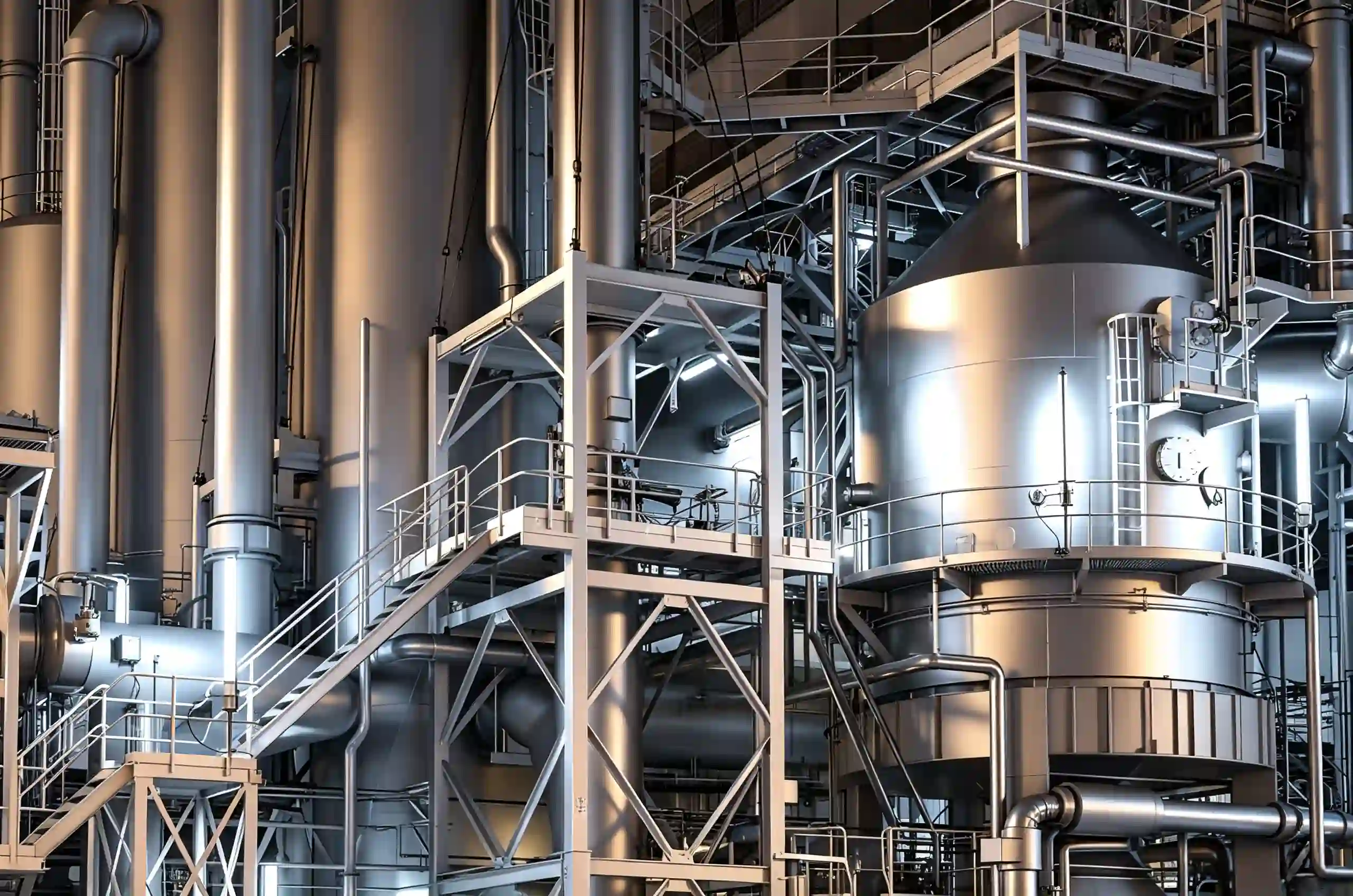
MS Polymerization Plant
Product Overview
Green Earth's MS resin polymerization plant is an industrial production system designed to manufacture methyl methacrylate styrene (MS) copolymer resin through controlled continuous bulk copolymerization.
The complete MS Resin Production Line integrates monomer proportioning, raw material mixing, continuous copolymerization, melt devolatilization, filtration, strand pelletizing, cooling, screening and packaging into a coordinated production system.
By controlling the ratio of styrene (SM) and methyl methacrylate (MMA), the plant can produce MS resin with different combinations of transparency, toughness, hardness and processing characteristics. It is designed for manufacturers producing transparent polymer materials for optical, lighting, packaging, medical and consumer applications.
Compared with conventional GPPS, MS resin provides a balance of high transparency, toughness and processability, making it suitable for applications where optical appearance, dimensional stability and processing performance are important.
MS Resin Production Process
The MS Resin Production Line uses continuous bulk copolymerization to convert styrene and methyl methacrylate monomers into high-performance transparent copolymer resin.
1. Monomer Proportioning and Mixing
Styrene and methyl methacrylate are accurately metered according to the target resin formulation.
The monomers are transferred into a sealed mixing system where they are combined with selected initiators and processing auxiliaries. Precise proportioning helps maintain consistent composition throughout continuous production.
2. Initiator Addition and Feed Preparation
Polymerization initiators and required additives are accurately dosed into the monomer mixture.
The prepared feed is continuously mixed under controlled conditions before entering the polymerization reactor section.
3. Continuous Copolymerization
The prepared monomer solution is continuously transferred through a series of polymerization reactors.
Each reactor incorporates controlled agitation, heat exchange and temperature monitoring. Reaction heat is removed through the jacketed cooling system to maintain stable polymerization conditions.
The continuous reactor configuration provides controlled residence time and supports consistent copolymer formation. For larger polymer production projects, Green Earth's industrial polymerization system can be configured around different production capacities and process requirements.
4. Melt Devolatilization
After polymerization, the polymer melt enters a multi-stage vacuum devolatilization system.
Controlled vacuum treatment removes residual monomers and other volatile components from the polymer melt. Effective devolatilization helps improve resin cleanliness and reduce unwanted volatile content during downstream processing.
5. Melt Filtration
The polymer melt passes through a high-precision filtration system before pelletizing.
The filtration section removes remaining solid contaminants and helps maintain stable melt quality during continuous operation.
6. Strand Extrusion and Pelletizing
The filtered polymer melt is extruded through a die plate to form continuous strands.
The strands pass through a controlled cooling system before entering a high-speed pelletizer, which cuts them into uniform resin pellets.
7. Cooling and Dewatering
The newly formed pellets are cooled through circulating process water.
A dewatering system removes surface moisture before the pellets enter the screening section. The cooling water can be filtered and recirculated to reduce water consumption.
8. Screening and Packaging
The cooled pellets are screened to separate oversized, undersized and adhered particles.
Qualified MS resin pellets are automatically conveyed to the packaging system for quantitative filling, sealing and transportation.
MS Transparent Resin Production Equipment Configuration
The production system uses modular equipment to integrate monomer preparation, polymerization and downstream resin processing.
A. Monomer Proportioning and Mixing System
The raw material section can include:
- Monomer storage and pretreatment tanks
- Automatic metering pumps
- Mixing tanks
- Feed valves
- Flow control systems
- Auxiliary dosing equipment
The system provides controlled SM and MMA feeding according to the selected resin formulation.
B. Continuous Copolymerization Reactor System
The reactor section consists of multiple continuous stirred-tank reactors arranged in series.
Each reactor can integrate:
- Agitation system
- Jacketed heat exchange
- Temperature control
- Pressure monitoring
- Safety pressure relief
- Feed control
The reactor configuration provides controlled reaction conditions and stable residence time throughout continuous production.
C. Devolatilization and Melt Filtration System
The polymer melt enters the devolatilization section after polymerization.
The system can include:
- Twin-screw extruder
- Multi-stage vacuum devolatilization
- Vacuum system
- Melt filtration
- Pressure monitoring
This configuration removes residual monomers and volatile components while maintaining controlled melt processing.
D. Strand Pelletizing System
The strand pelletizing section includes:
- Melt metering system
- Alloy die plate
- Strand cooling system
- High-speed pelletizer
- Pellet conveying system
The configuration produces uniform pellets suitable for downstream resin processing.
E. Drying and Screening System
The pellet handling section can include:
- Centrifugal dehydrator
- Hot-air dryer
- Vibrating screen
- Finished-product conveyor
- Automatic packaging equipment
This section reduces surface moisture and separates qualified pellets from defective particles before packaging.
Key Technical Features
Precise Monomer Ratio Control
The production system provides controlled dosing of styrene and methyl methacrylate, allowing manufacturers to adjust the copolymer formulation according to target resin properties.
Continuous Bulk Copolymerization
Continuous reactor operation provides controlled feed, residence time and temperature conditions for stable MS resin production.
Efficient Heat Management
Jacketed heat exchange systems remove polymerization heat and help maintain the required reaction temperature throughout the reactor train.
Multi-Stage Vacuum Devolatilization
The devolatilization system removes residual monomers and volatile components from the polymer melt before pelletizing.
This helps reduce volatile content and supports more stable downstream processing.
High-Precision Melt Filtration
The filtration system removes residual solid contaminants from the polymer melt, helping maintain consistent resin quality and protect downstream pelletizing equipment.
Intelligent Process Control
A centralized DCS control system can monitor and adjust key parameters across monomer feeding, polymerization, devolatilization, extrusion and pelletizing.
The control system can also provide alarm functions and process monitoring for continuous production management.
Flexible Resin Formulation
The SM-to-MMA ratio and selected additives can be adjusted according to target properties.
Depending on formulation and process conditions, the production system can be configured for different combinations of:
- Transparency
- Toughness
- Hardness
- Melt flow
- Thermal stability
- Surface quality
MS Transparent Resin Performance
The properties of MS resin depend on monomer ratio, molecular structure, polymerization conditions and formulation.
The production system can be configured to target:
| Performance | Production Consideration |
|---|---|
| Transparency | Controlled copolymer composition |
| Toughness | Monomer ratio and polymer structure |
| Hardness | Formulation and molecular characteristics |
| Melt flow | Polymerization and formulation control |
| Internal stress | Resin formulation and processing conditions |
| Thermal stability | Polymer composition and process control |
| Surface quality | Resin cleanliness and processing characteristics |
MS resin combines the optical transparency associated with PMMA with the processing characteristics of styrenic polymers. For downstream processing requirements, Green Earth's plastic production line portfolio provides additional equipment options for polymer processing applications.
Applications of MS Transparent Resin
The resulting MS resin can be processed into transparent components where optical appearance, processability and mechanical performance are required.
Optical and Display Components
Suitable grades can be used for selected light guide plates, optical diffusion components and other transparent display-related parts.
LED and Lighting Components
MS resin can be processed into selected lampshades, light covers and lighting accessories requiring transparency and surface quality.
Transparent Packaging
Suitable grades can be used for transparent cosmetic containers, packaging boxes, caps and other appearance-sensitive packaging components.
Food and Household Products
Selected MS resin grades can be used for transparent storage containers, household products and other molded applications where the material meets applicable regulatory requirements.
Medical and Healthcare Components
Certain grades may be used for transparent medical components and disposable products when the resin formulation and applicable compliance requirements are satisfied.
Consumer and Decorative Products
MS resin can also be processed into transparent household accessories, stationery and decorative plastic components.
MS Resin Grade Customization
Different applications require different combinations of optical, mechanical and processing properties.
The MS transparent resin plant can be configured around specific product requirements, including:
- Transparency
- Toughness
- Hardness
- Melt flow
- Thermal stability
- Surface appearance
- Dimensional stability
For customized projects, the required monomer ratio, initiator system, reactor conditions and downstream processing parameters should be determined according to the target resin specifications.
Production Plant Configuration
The MS resin polymerization plant can be engineered according to target capacity, product grade and factory conditions.
| Parameter | Configuration |
|---|---|
| Polymerization process | Continuous bulk copolymerization |
| Main monomers | Styrene + methyl methacrylate |
| Reactor system | Multiple CSTRs |
| Devolatilization | Multi-stage vacuum |
| Melt filtration | High-precision filtration |
| Pelletizing | Strand pelletizing |
| Control system | DCS / PLC |
| Resin grades | Customized according to formulation |
| Packaging | Automatic quantitative packaging |
Final equipment selection should consider production capacity, target resin properties, monomer formulation, utility conditions, factory layout and applicable environmental requirements.
For complete project planning, Green Earth can also provide integrated support as a polymer processing equipment manufacturer, covering extrusion, polymer processing and related industrial equipment.
Environmental and Process Control
The production system can use enclosed material transfer and processing sections to reduce monomer and volatile emissions during operation.
A dedicated volatile gas collection and treatment system can be integrated according to the production process and local environmental requirements.
Process water used for pellet cooling can also be filtered and recirculated through a closed-loop system to reduce water consumption.
The final environmental control configuration should be engineered according to the selected raw materials, production capacity and applicable local regulations.
MS Resin Production Plant FAQ
What is an MS resin polymerization plant?
An MS resin polymerization plant is an industrial production system used to manufacture methyl methacrylate styrene copolymer resin through controlled copolymerization followed by devolatilization, filtration and pelletizing.
What raw materials are used to produce MS resin?
The primary monomers are styrene and methyl methacrylate (MMA). Polymerization initiators and other processing additives may also be used according to the selected formulation.
What is the difference between MS resin and GPPS?
MS resin combines styrenic processing characteristics with improved transparency and toughness compared with conventional GPPS. Actual performance depends on the formulation and polymerization conditions.
Can the monomer ratio be customized?
Yes. The styrene-to-MMA ratio can be adjusted according to target transparency, toughness, hardness, melt flow and other required resin properties.
Why is vacuum devolatilization important?
Residual monomers and volatile components can affect resin quality and downstream processing. Multi-stage vacuum devolatilization reduces these components before pelletizing.
What pelletizing method does the plant use?
The system primarily uses strand pelletizing, with cooling and dewatering equipment integrated into the downstream section.
Can the MS resin production line be customized?
Yes. Reactor configuration, production capacity, monomer dosing system, devolatilization system, filtration, pelletizing and automation can be configured according to project requirements.
Request an MS Resin Production Solution
Green Earth provides engineered MS resin production equipment for manufacturers developing transparent styrenic copolymer resin production projects.
Share your target MS resin grade, production capacity and required product properties to discuss a suitable polymerization and pelletizing configuration with the Green Earth technical team.