

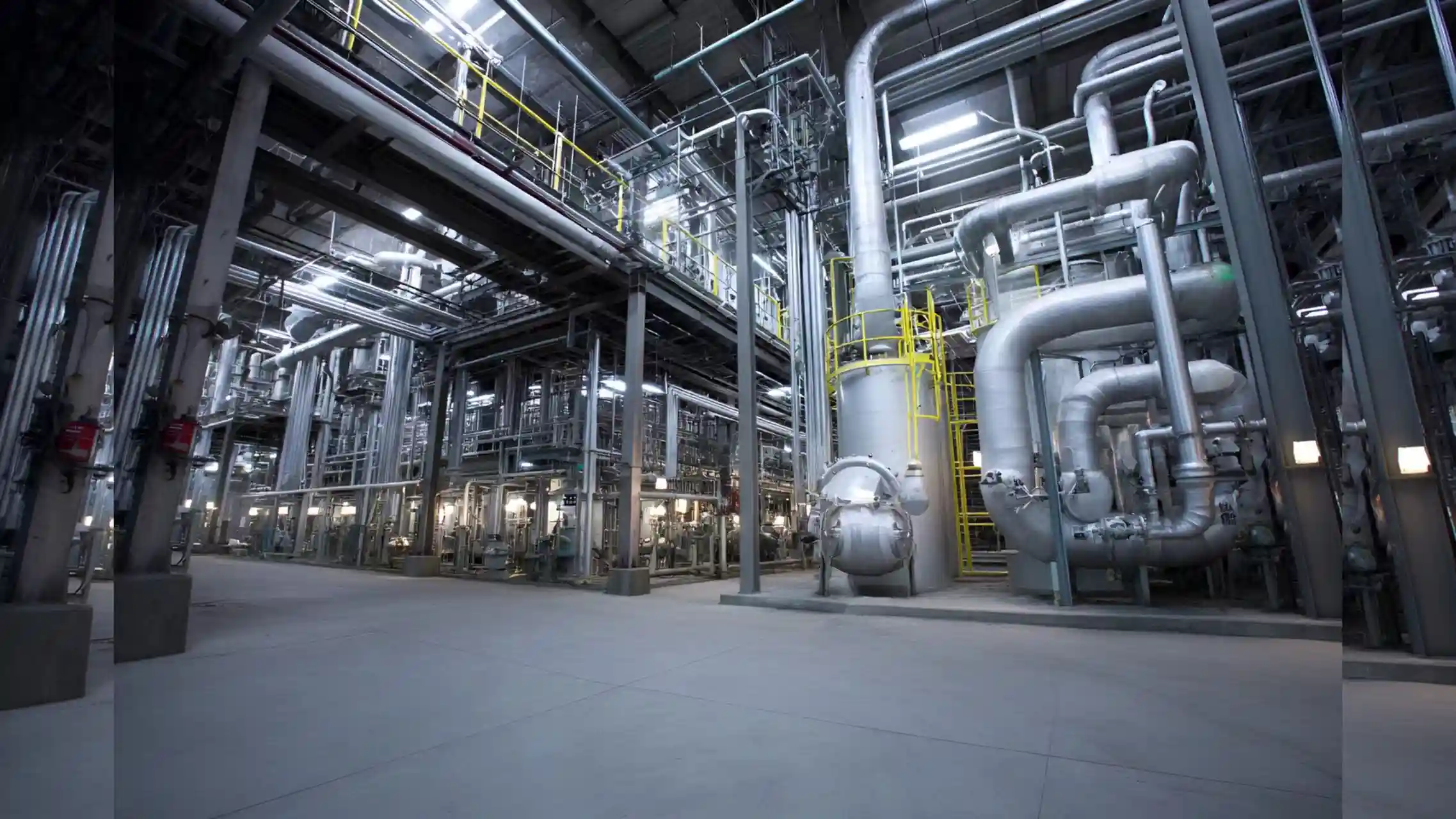
ABS Polymerization Plant
Product Overview
Green Earth's ABS Polymerization Plant is an industrial production system designed for manufacturing acrylonitrile-butadiene-styrene (ABS) resin through controlled polymerization, coagulation, washing, drying, compounding and pelletizing processes.
The complete ABS Production Plant integrates raw material preparation, graft polymerization, polymer particle separation, drying, extrusion, melt filtration and pelletizing into a coordinated production system. The plant can be configured according to production capacity, target ABS grades, formulation requirements and downstream processing conditions.
The ABS Resin Production Line is suitable for manufacturers producing general-purpose, high-impact, high-gloss, heat-resistant and other customized ABS grades for automotive, electrical and electronic, appliance, consumer product and industrial applications.
ABS Resin Production Process
The production process combines emulsion graft polymerization with downstream compounding and pelletizing to provide controlled resin production from raw materials to finished ABS pellets.
1. Raw Material Preparation and Feeding
Styrene, acrylonitrile and butadiene are prepared according to the selected formulation. Emulsifiers, initiators and other process additives are accurately metered through dedicated feeding systems.
The raw materials are mixed under controlled conditions to form a stable emulsion before entering the polymerization section.
2. Graft Polymerization
The prepared emulsion is continuously transferred through a series of polymerization reactors.
Each reactor is equipped with controlled agitation, temperature monitoring and heat exchange systems. Reaction conditions are managed throughout the reactor train to maintain stable polymerization and consistent polymer properties.
3. Coagulation and Washing
After polymerization, the resulting latex is transferred to the coagulation section.
Controlled coagulation separates the polymer particles from the aqueous phase. The polymer particles are then washed to reduce residual emulsifiers, unreacted components and other process impurities.
4. Dehydration and Drying
The washed polymer particles are processed through centrifugal dehydration followed by hot-air drying.
A controlled drying system reduces residual moisture before the material enters the compounding and extrusion section.
5. Compounding and Melt Homogenization
The dried polymer is blended with selected additives according to the target ABS grade.
A twin-screw extruder provides controlled melting, mixing and homogenization, allowing the resin formulation to be adjusted for different performance requirements.
6. Melt Filtration
The polymer melt passes through a filtration system before pelletizing.
Continuous filtration removes remaining solid contaminants and helps maintain stable melt quality during continuous production.
7. Pelletizing and Cooling
The filtered polymer melt is transferred to the pelletizing system.
Depending on resin grade, production capacity and pellet specifications, the line can be configured with underwater pelletizing or strand pelletizing.
The newly formed pellets are rapidly cooled and solidified through a controlled water circulation system.
8. Screening and Packaging
The cooled ABS pellets pass through a vibrating screening system to separate oversized, undersized and defective particles.
Qualified pellets are then transferred to an automatic quantitative packaging system for storage and transportation.
Core Equipment Configuration
The ABS Manufacturing Plant uses a modular configuration in which polymerization, separation, drying, compounding and pelletizing systems work as an integrated production unit.
Raw Material Preparation System
The feeding section can include:
- Raw material storage tanks
- Mixing tanks
- Metering pumps
- Flow control valves
- Emulsion preparation equipment
- Transfer pumps
The system provides controlled raw material dosing and stable feeding to the polymerization reactors.
Polymerization Reactor System
The polymerization section consists of multiple reactors configured according to the production process and required capacity.
Core systems include:
- Reactor vessels
- Agitation systems
- Jacketed heat exchange
- Temperature control
- Feed control
- Reaction monitoring
The reactor configuration is designed to provide stable reaction conditions and controlled residence time.
Coagulation and Washing System
This section separates polymer particles from the liquid phase and removes residual process chemicals and soluble impurities.
The configuration can include:
- Coagulation tanks
- Agitation systems
- Water circulation pumps
- Washing systems
- Solid-liquid separation equipment
Dehydration and Drying System
The separated polymer particles are processed through centrifugal dehydration and hot-air drying.
The drying system can be configured according to material moisture requirements and production capacity.
Compounding and Pelletizing System
The final processing section integrates:
- Additive dosing
- Twin-screw extrusion
- Melt filtration
- Pelletizing
- Cooling
- Screening
- Packaging
This configuration converts the polymer intermediate into consistent finished ABS resin pellets.
Key Technical Features
Controlled Graft Polymerization
Multiple reactors with controlled temperature and heat exchange provide stable polymerization conditions throughout the production process.
Flexible ABS Grade Production
Formulation and process parameters can be adjusted to produce different ABS grades according to target mechanical, thermal, surface and processing properties.
Potential product grades include:
- General-purpose ABS
- High-impact ABS
- High-gloss ABS
- Heat-resistant ABS
- Weather-resistant ABS
The achievable grade range depends on the selected formulation, reactor configuration and process conditions.
Precise Process Control
The centralized control system monitors critical parameters including:
- Raw material feed rate
- Reaction temperature
- Reactor conditions
- Pressure
- Residence time
- Extrusion temperature
- Melt pressure
- Pelletizing parameters
Automated alarms and process monitoring help maintain stable production conditions.
Efficient Reaction Heat Management
Polymerization generates reaction heat that must be effectively controlled. Dedicated heat exchange systems help maintain the required reactor temperature and support stable continuous operation.
Integrated Compounding
The twin-screw extrusion system provides controlled additive dosing, melting, mixing and homogenization before pelletizing.
Multiple Pelletizing Configurations
The production line can use underwater or strand pelletizing according to ABS grade, production capacity and required pellet characteristics.
ABS Resin Grade and Performance
The final properties of ABS resin depend on formulation, polymerization conditions and downstream compounding parameters.
The production system can be configured to target properties including:
| Performance Factor | Production Focus |
|---|---|
| Impact resistance | Polymer formulation and graft structure |
| Rigidity | Resin composition and formulation |
| Heat resistance | Grade formulation and process control |
| Surface gloss | Resin structure and compounding |
| Melt flow | Molecular structure and formulation |
| Dimensional stability | Resin formulation and processing |
| Weather resistance | Grade-specific additives and formulation |
For projects with defined product specifications, the production system can be engineered around the required resin grade and downstream application.
Applications of ABS Resin
ABS resin manufactured by the plant can be processed into a wide range of industrial and consumer products.
Automotive Components
Selected ABS grades can be used for interior and exterior automotive components requiring impact resistance, dimensional stability and surface quality.
Electrical and Electronic Products
ABS resin is widely used for housings, structural components and other parts of electrical and electronic products.
Household Appliances
Suitable grades can be processed into appliance housings, panels and internal plastic components.
Luggage and Protective Products
High-impact ABS grades can be used for luggage shells, helmets and other products requiring impact resistance.
Consumer and Industrial Products
ABS resin can also be processed into durable consumer products, industrial housings, profiles and other molded components.
For broader engineering requirements, Green Earth works as a polymer processing equipment manufacturer providing extrusion and polymer processing equipment for industrial production projects.
Production Plant Configuration
The ABS Production Plant can be configured according to the customer's target production capacity, product grades and site conditions.
Key project parameters include:
| Parameter | Configuration |
|---|---|
| Production capacity | Project-specific |
| Polymerization process | Graft polymerization |
| Reactor system | Multi-stage |
| Compounding | Twin-screw extrusion |
| Pelletizing | Underwater / strand |
| Control system | DCS / PLC |
| ABS grades | General-purpose / high-impact / customized |
| Packaging | Automatic quantitative packaging |
The final plant configuration should be determined according to raw material formulation, target annual capacity, utility conditions, product specifications and local environmental requirements.
Integrated Polymer Production Solutions
Green Earth provides complete industrial polymer production solutions covering polymerization, extrusion, compounding and pelletizing.
For projects involving multiple polymer materials, the polymer production plant portfolio provides additional production system options.
Green Earth also provides a styrenic resins production line for styrene-based polymer production applications.
ABS Production Plant FAQ
What is an ABS Polymerization Plant?
An ABS Polymerization Plant is an industrial production system used to manufacture ABS resin through controlled polymerization followed by separation, drying, compounding and pelletizing.
What raw materials are used for ABS resin production?
ABS is produced primarily from acrylonitrile, butadiene and styrene. Additional emulsifiers, initiators and formulation additives may be used depending on the selected production process and target resin grade.
What ABS grades can the plant produce?
The plant can be configured for general-purpose, high-impact, high-gloss, heat-resistant and other customized grades, depending on the formulation and process configuration.
What pelletizing systems are available?
The production line can be configured with underwater or strand pelletizing according to the resin properties, production capacity and required pellet specifications.
Can the ABS production line be customized?
Yes. Reactor configuration, production capacity, extrusion system, pelletizing system, automation level and auxiliary equipment can be engineered according to the project requirements.
What factors determine ABS production plant capacity?
Capacity depends on reactor configuration, raw material formulation, residence time, downstream drying and compounding capacity, pelletizing system and target operating schedule.
Request an ABS Production Plant Solution
Green Earth provides engineered ABS polymerization and production systems for manufacturers requiring integrated resin production from raw material preparation through finished pellet packaging.
Share your target ABS grade, annual production capacity and project requirements to discuss a suitable plant configuration with the Green Earth technical team.