

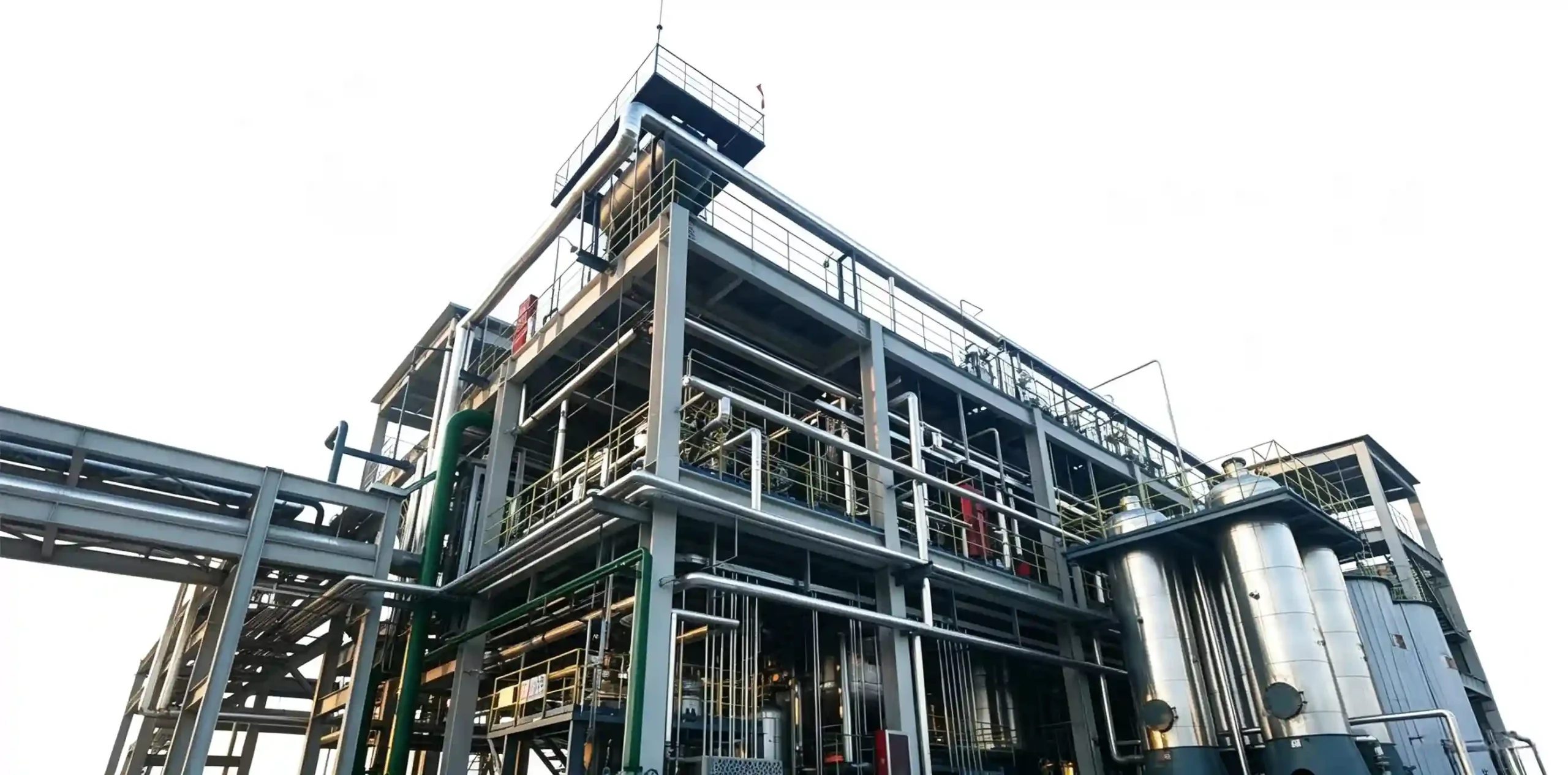
PMMA Polymerization Plant
Product Overview
Green Earth's PMMA polymerization plant is an industrial production system designed to manufacture high-clarity polymethyl methacrylate (PMMA) resin through controlled bulk polymerization and downstream extrusion processing.
PMMA, also known as acrylic or plexiglass, is a transparent thermoplastic valued for its high light transmission, weather resistance, surface hardness and processing versatility. The production system integrates MMA monomer purification, initiator preparation, polymerization, demolding, crushing, extrusion, devolatilization, filtration, pelletizing, cooling and screening.
The complete PMMA production equipment can be configured for different resin grades and production requirements. It is suitable for manufacturers supplying PMMA materials for optical components, lighting products, architectural applications, automotive transparent parts, packaging and other applications requiring high optical quality.
PMMA Polymerization Process
The Bulk polymerization PMMA unit uses controlled bulk polymerization to convert purified methyl methacrylate (MMA) monomer into PMMA resin.
1. MMA Monomer Purification
Methyl methacrylate is transferred to a multi-stage purification system before polymerization.
Filtration, distillation and dehydration processes remove trace impurities, moisture and other unwanted components from the monomer.
High-purity MMA provides a controlled starting material for the polymerization stage and helps maintain the optical quality of the final PMMA resin.
2. Initiator and Auxiliary Agent Preparation
Purified MMA is transferred to a controlled mixing system.
Polymerization initiators, cross-linking agents and other required processing additives are accurately dosed according to the selected formulation.
The mixture is continuously stirred under controlled conditions to provide a uniform feed for polymerization.
3. Bulk Polymerization
The prepared monomer solution enters the polymerization reactor system.
The reactors incorporate controlled agitation, jacketed heat exchange and temperature monitoring to manage the heat generated during polymerization.
Process conditions are controlled according to the required conversion, molecular characteristics and target PMMA grade.
4. Demolding and Resin Preparation
After polymerization, the bulk PMMA material is demolded and transferred to the downstream processing section.
For pellet-grade production, the polymerized material is crushed into appropriately sized pieces before entering the extrusion system.
5. Extrusion and Plasticization
The PMMA pieces are conveyed into a twin-screw extruder.
Controlled barrel temperature and screw operation gradually melt and homogenize the polymer. The extrusion section can also incorporate melt filtration to remove remaining solid contaminants.
6. Vacuum Devolatilization
The polymer melt passes through a multi-stage vacuum devolatilization system.
Residual monomers and volatile components are removed under controlled vacuum conditions, helping reduce volatile content and improve downstream processing stability.
7. Pelletizing and Cooling
The filtered polymer melt is extruded through a precision die plate and cut into uniform pellets.
The newly formed pellets are rapidly cooled through a circulating water system before entering the pellet handling section.
8. Screening and Packaging
The cooled pellets pass through a vibrating screening system to separate oversized, undersized and defective particles.
Qualified PMMA resin pellets are transferred to a quantitative packaging system for moisture-protected storage and transportation.
PMMA Production Equipment Configuration
The production system adopts a modular configuration that connects raw material preparation, polymerization and downstream resin processing.
A. MMA Monomer Purification System
The monomer purification section can include:
- Precision filtration
- Distillation column
- Dehydration equipment
- Monomer storage tanks
- Transfer pumps
- Process monitoring instruments
This system prepares high-purity MMA for controlled polymerization.
B. Polymerization Reaction System
The polymerization section is the core of the PMMA production equipment.
It can include multiple polymerization reactors equipped with:
- Agitation systems
- Jacketed heat exchange
- Temperature control
- Pressure monitoring
- Safety pressure relief
- Feed control
The reactor configuration can be engineered according to production capacity and target PMMA grade.
C. Devolatilization and Melt Filtration System
The downstream melt-processing section integrates:
- Twin-screw extruder
- Multi-stage vacuum devolatilization
- Vacuum system
- Melt filtration
- Pressure monitoring
This configuration removes residual monomers and volatile components while maintaining stable melt quality.
D. Pelletizing and Cooling Unit
The pelletizing section includes:
- Melt metering system
- Precision die plate
- High-speed cutter
- Circulating water cooling
- Pellet conveying system
The system produces consistent PMMA pellets for downstream processing.
E. Drying and Screening Module
The pellet handling section can include:
- Centrifugal dehydrator
- Hot-air dryer
- Vibrating screen
- Finished-product conveyor
- Automatic packaging system
This section reduces surface moisture and separates qualified pellets before final packaging.
Key Technical Features
High-Purity MMA Preparation
Multi-stage monomer purification helps reduce impurities and moisture before polymerization, providing a controlled feedstock for high-clarity PMMA production.
Controlled Bulk Polymerization
The reactor system provides precise control of temperature, feed rate and reaction conditions to support stable polymerization and consistent resin properties.
Efficient Heat Management
Jacketed heat exchange systems remove polymerization heat and maintain the required reaction temperature throughout the process.
Multi-Stage Vacuum Devolatilization
The vacuum devolatilization system removes residual monomers and volatile components from the polymer melt.
This helps reduce volatile content and supports stable downstream processing.
High-Precision Melt Filtration
The filtration system removes residual solid impurities from the polymer melt before pelletizing, helping improve melt cleanliness and product consistency.
Intelligent DCS Control
A centralized DCS control system can monitor key parameters across monomer purification, polymerization, extrusion and pelletizing.
Automated alarms and process monitoring support stable continuous production and reduce manual intervention.
Flexible Product Configuration
The production system can be configured for different PMMA resin specifications by adjusting polymerization conditions, molecular characteristics and downstream processing parameters.
Depending on the production configuration, PMMA materials can be prepared for injection molding, extrusion and other downstream processing applications.
PMMA Resin Performance
The final properties of PMMA depend on monomer purity, polymerization conditions, molecular characteristics and downstream processing.
The production system can be configured to target:
| Performance | Production Consideration |
|---|---|
| Light transmission | Monomer purity and polymer cleanliness |
| Transparency | Polymer structure and impurity control |
| Weather resistance | Resin formulation and polymer characteristics |
| Surface hardness | Material formulation and molecular properties |
| Impact performance | Polymer formulation and processing |
| Melt flow | Molecular characteristics and process control |
| Thermal stability | Resin formulation and polymerization conditions |
| Dimensional stability | Molecular structure and processing conditions |
PMMA is particularly suitable for applications requiring a combination of optical clarity, surface quality, weather resistance and processing flexibility.
Applications of PMMA Resin
PMMA resin produced by the plant can be processed into transparent components across multiple industries.
Optical Components
PMMA can be used for selected optical lenses, light guide plates, optical diffusion components and other transparent parts.
Lighting Products
Suitable PMMA grades can be processed into lampshades, light covers, LED components and other lighting products requiring high transparency.
Architectural Applications
PMMA can be used for transparent partitions, decorative panels, skylights and other architectural components where optical appearance and weather resistance are required.
Automotive Components
Selected grades can be processed into lamp covers, light shades and other transparent automotive components.
Advertising and Display Products
PMMA is widely suitable for display stands, illuminated signs, advertising light boxes and transparent decorative structures.
Transparent Packaging
Suitable grades can be processed into cosmetic packaging, transparent containers, boxes and other appearance-sensitive products.
Medical Applications
Certain PMMA grades can be used for selected transparent medical components when the material formulation and applicable regulatory requirements are satisfied.
PMMA Product Grade Customization
Different downstream applications require different combinations of optical, mechanical and processing properties.
The PMMA polymerization plant can be engineered around specific requirements, including:
- Optical transparency
- Light transmission
- Molecular weight
- Melt flow
- Surface hardness
- Weather resistance
- Thermal stability
- Dimensional stability
The final formulation and process parameters should be determined according to the required resin specifications and downstream processing method.
Production Capacity and Plant Configuration
The PMMA production equipment can be engineered according to target capacity, product grade, factory conditions and downstream application requirements.
| Parameter | Configuration |
|---|---|
| Polymerization process | Bulk polymerization |
| Main monomer | Methyl methacrylate (MMA) |
| Polymerization system | Controlled reactor system |
| Devolatilization | Multi-stage vacuum |
| Melt filtration | High-precision filtration |
| Extrusion | Twin-screw |
| Pelletizing | Strand / die-face configuration according to project |
| Control system | DCS / PLC |
| Product form | PMMA resin pellets |
| Packaging | Automatic quantitative packaging |
Final equipment selection should consider annual production capacity, target PMMA grade, monomer specifications, utility conditions, factory layout and applicable environmental requirements.
Industrial Polymerization Integration
Green Earth provides integrated polymerization solutions for manufacturers developing industrial resin production projects.
The broader petrochemical polymerization equipment portfolio covers polymer production systems designed for different polymer materials and process requirements.
These systems can be configured according to raw material characteristics, production capacity, polymerization technology and required downstream processing.
Polymer Processing and Downstream Production
After polymerization, resin processing plays an important role in achieving consistent pellet quality and downstream processability.
Green Earth provides polymer processing equipment for extrusion, compounding, pelletizing and other polymer processing applications.
The equipment configuration can be integrated with upstream polymerization systems to create a coordinated production workflow from raw material preparation through finished resin processing.
Environmental and Process Control
The production system can use enclosed material transfer and processing sections to control monomer and volatile emissions.
A dedicated volatile gas collection and treatment system can be integrated according to production capacity, process configuration and local environmental requirements.
Cooling water used during pelletizing can also be filtered and recirculated through a closed-loop system to reduce water consumption.
Environmental protection equipment should be selected according to the actual process conditions and applicable local regulations.
PMMA Polymerization Plant FAQ
What is a PMMA Polymerization Plant?
A PMMA Polymerization Plant is an industrial production system used to convert methyl methacrylate monomer into PMMA resin through controlled polymerization and downstream processing.
What is the main raw material for PMMA production?
The primary raw material is methyl methacrylate (MMA). Polymerization initiators and other formulation components may also be required depending on the target PMMA grade.
What polymerization method is used for PMMA?
The system uses controlled bulk polymerization. The specific reactor configuration and process conditions depend on production capacity and target resin properties.
Why is MMA purification important?
Impurities and moisture in MMA can affect polymerization stability and the optical quality of PMMA. Multi-stage purification helps provide a more consistent feedstock for the polymerization process.
Can the PMMA plant produce different resin grades?
Yes. Polymerization conditions and downstream processing parameters can be configured according to target molecular characteristics, optical performance, melt flow and other product requirements.
Does the plant include devolatilization?
Yes. A multi-stage vacuum devolatilization system can be integrated to reduce residual monomers and volatile components in the polymer melt.
What applications use PMMA resin?
PMMA is widely used in optical components, lighting products, architectural applications, automotive transparent parts, advertising displays, transparent packaging and selected medical products.
Can the PMMA production equipment be customized?
Yes. Reactor configuration, production capacity, purification system, extrusion section, devolatilization, filtration, pelletizing and automation can be configured according to project requirements.
Request a PMMA Production Solution
Green Earth provides engineered PMMA polymerization and production equipment for industrial resin manufacturers.
Share your target PMMA grade, production capacity, product specifications and factory requirements to develop a suitable polymerization, extrusion and pelletizing configuration with the Green Earth technical team.