

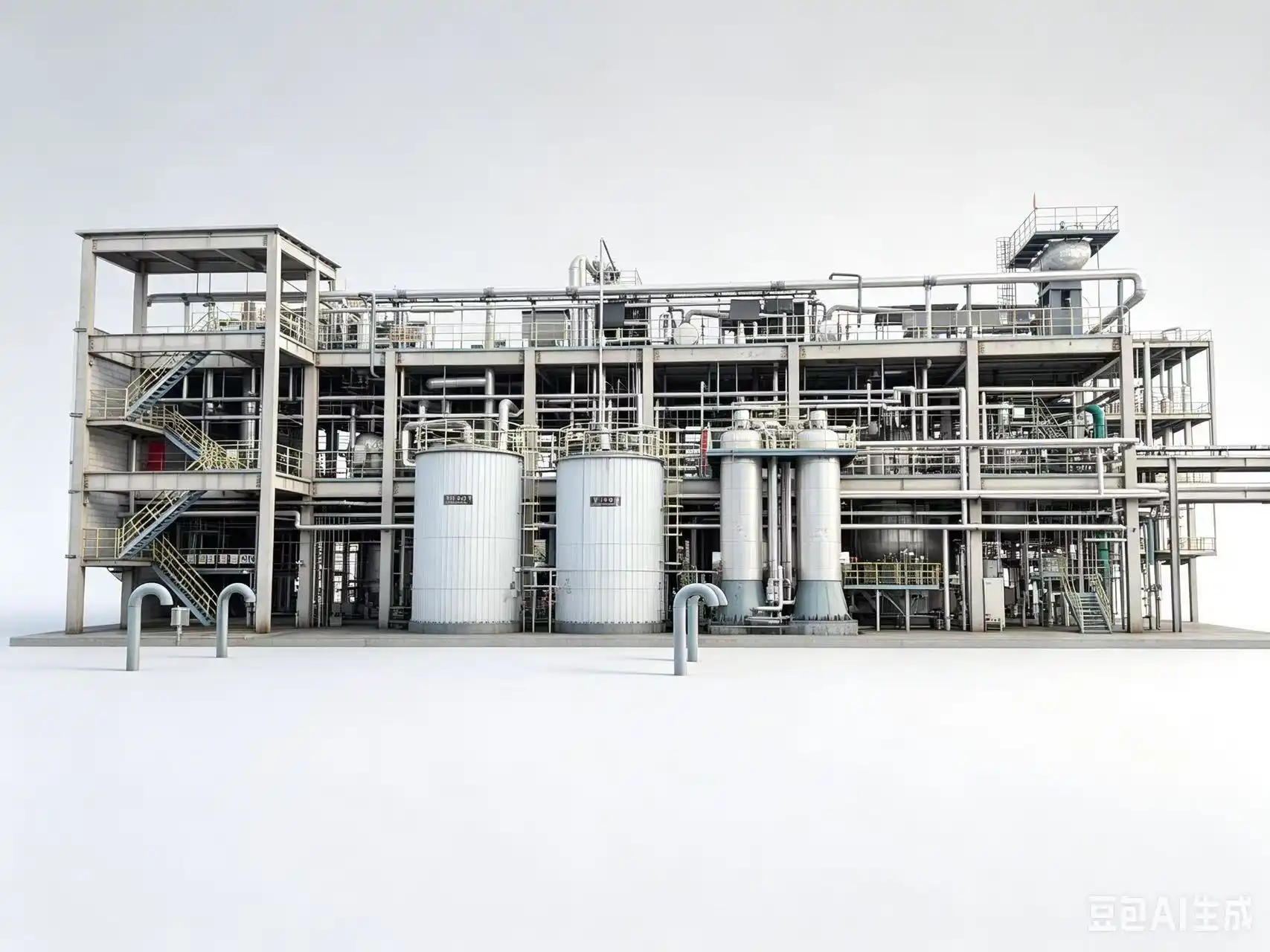
PS/HIPS Polymerization Plant
Product Overview
Green Earth's GPPS HIPS polymerization plant is an industrial production system designed for continuous bulk polymerization of general-purpose polystyrene (GPPS) and high-impact polystyrene (HIPS).
The plant uses high-purity styrene monomer as the primary raw material. For HIPS production, polybutadiene rubber is incorporated into the styrene system to improve impact resistance. By adjusting the formulation, reaction conditions and process parameters, the production line can manufacture different grades of GPPS and HIPS resin with controlled melt flow, rigidity, impact strength and dimensional stability.
The complete HIPS production line integrates raw material purification and feeding, rubber dissolution, continuous polymerization, devolatilization, extrusion, filtration, underwater pelletizing, cooling, screening and packaging.
It is designed for industrial resin manufacturers supplying materials to packaging, appliances, electronics, construction, automotive and other downstream plastic-processing industries.
GPPS and HIPS Polymerization Process
The HIPS Resin Production Plant uses continuous bulk polymerization to provide stable reaction control and efficient resin production.
1. Styrene Monomer Purification and Feeding
High-purity styrene monomer is transferred to the raw material pretreatment system.
The system removes trace moisture and impurities before accurately metering the purified styrene into the polymerization section.
Stable raw material quality provides a controlled foundation for consistent polymerization and resin performance.
2. Rubber Dissolution for HIPS Production
For HIPS production, polybutadiene rubber is accurately added to the styrene monomer.
The rubber is dissolved and uniformly dispersed through a dedicated mixing system to form a controlled rubber-monomer solution before polymerization.
This step is important for developing the impact-modified structure required for HIPS resin.
3. Continuous Bulk Polymerization
The prepared feed enters a series of polymerization reactors.
The reactor train can include pre-polymerization and final polymerization stages. Each reactor incorporates controlled agitation, heat exchange and temperature monitoring.
Reaction temperature, pressure, feed rate and residence time are managed throughout the process to achieve the required conversion and polymer characteristics.
4. Polymer Melt Devolatilization
After polymerization, the polymer melt passes through a multi-stage vacuum devolatilization system.
Residual styrene monomer and other volatile components are removed under controlled vacuum conditions before the polymer enters the final extrusion and pelletizing stages.
5. Melt Extrusion and Filtration
The polymer melt is transferred to the extrusion section for controlled melt processing.
Depending on the resin type and project configuration, single-screw or twin-screw extrusion can be selected. A precision filtration system removes remaining solid contaminants from the polymer melt.
6. Underwater Pelletizing
The filtered polymer melt is extruded through a precision die plate and cut into pellets by a high-speed underwater cutter.
The underwater pelletizing environment provides rapid cooling while reducing dust generation and pellet adhesion.
7. Cooling, Dewatering and Screening
The pellets are immediately cooled through circulating process water.
A centrifugal dewatering system removes surface moisture before the pellets enter a vibrating screen. Oversized, undersized and defective particles are separated from qualified resin pellets.
8. Packaging and Storage
Qualified GPPS or HIPS pellets are automatically transferred to a quantitative packaging system.
Depending on project requirements, packaging can use 25 kg moisture-resistant bags or 500 to 1,000 kg FIBC bulk bags.
HIPS Resin Production Technology
The core of the HIPS Production Line is the controlled combination of styrene polymerization and rubber modification.
Compared with general-purpose polystyrene, HIPS incorporates a rubber phase into the polymer structure to improve impact performance while maintaining useful stiffness and processability.
Key process controls include:
- Styrene monomer purity
- Rubber concentration
- Rubber dissolution
- Feed ratio
- Polymerization temperature
- Reaction pressure
- Residence time
- Conversion rate
- Devolatilization efficiency
- Melt filtration
- Pelletizing conditions
These parameters can be adjusted according to the target HIPS grade and downstream application.
Key Technical Features
Flexible GPPS and HIPS Production
The production system can support both GPPS and HIPS production.
By changing the raw material formulation, rubber addition and selected process parameters, manufacturers can switch between general-purpose and impact-modified polystyrene grades.
Precise Polymerization Control
A closed-loop process control system monitors key production parameters including:
- Reaction temperature
- Pressure
- Feed rate
- Material residence time
- Melt pressure
- Extruder conditions
Precise control helps maintain consistent molecular characteristics and resin performance.
Efficient Devolatilization
The multi-stage vacuum devolatilization system removes residual styrene monomer and other volatile components from the polymer melt.
Effective devolatilization supports lower residual volatile content and more stable downstream processing.
Intelligent DCS Control
The production line can incorporate a centralized DCS system for monitoring and controlling the complete polymerization process.
Operators can monitor process conditions in real time, while automated alarms and fault diagnosis functions help reduce operating risks.
Advanced Underwater Pelletizing
The underwater pelletizing system produces uniform pellets with controlled particle size and smooth surfaces.
Continuous cooling and closed pellet handling also help reduce contamination and pellet adhesion.
Stable Resin Quality
Controlled polymerization, devolatilization, filtration and pelletizing work together to produce GPPS and HIPS pellets with consistent processing characteristics.
The resulting resin can be supplied to downstream injection molding and extrusion operations according to the applicable grade specifications.
GPPS and HIPS Resin Performance
The production system can be configured to target different combinations of resin properties.
| Property | GPPS | HIPS |
|---|---|---|
| Rigidity | High | Moderate to high |
| Impact resistance | Moderate | High |
| Transparency | Available in suitable grades | Generally lower than GPPS |
| Processability | Excellent | Excellent |
| Dimensional stability | Good | Good |
| Typical processing | Injection molding, extrusion | Injection molding, extrusion |
Actual resin properties depend on polymer formulation, molecular characteristics, rubber content and process conditions.
GPPS Resin Applications
GPPS produced by the plant can be used for applications requiring rigidity, transparency and good processing performance.
Typical applications include:
- XPS extruded insulation board production
- Disposable food containers and packaging
- Cosmetic packaging
- Electronic packaging trays
- Stationery products
- Transparent household products
- Decorative plastic components
GPPS can also serve as a feedstock for selected styrenic polymer processing applications.
HIPS Resin Applications
HIPS resin is designed for applications where improved impact resistance is required.
Typical applications include:
- Household appliance housings
- Refrigerator and washing machine components
- Electronic product housings
- Automotive interior components
- Industrial plastic parts
- Disposable tableware
- Food packaging
- Toy components
- Bathroom accessories
- General-purpose impact-resistant molded products
HIPS Polymerization Equipment Configuration
The HIPS polymerization equipment adopts a modular structure covering polymerization and downstream resin processing.
A. Monomer Proportioning and Mixing Module
This module includes:
- Styrene purification tank
- Automatic metering pump
- Mixing tank
- Feed valves
- Auxiliary material dosing system
For HIPS production, the module also supports controlled addition and mixing of polybutadiene rubber.
B. Polymerization Reaction Section
The polymerization section consists of multiple reactors arranged in series.
The reactors can integrate:
- Jacketed heat exchange
- Agitation
- Static mixing
- Temperature control
- Pressure monitoring
- Safety pressure relief
The reactor configuration is designed to maintain controlled reaction conditions throughout continuous production.
C. Devolatilization Extruder
This module can include:
- Single-screw or twin-screw extruder
- Multi-stage vacuum devolatilization
- Vacuum system
- Melt filtration
- Pressure monitoring
The equipment selection can be matched to the resin grade and required production capacity.
D. Underwater Pelletizing Unit
The pelletizing section integrates:
- Melt metering
- Alloy die plate
- High-speed cutter
- Circulating water cooling
- Pellet conveying
The system converts the polymer melt into uniform resin pellets.
E. Drying and Screening Module
The final handling section includes:
- Centrifugal dehydrator
- Vibrating screen
- Finished-product conveyor
- Pellet collection system
- Automatic packaging equipment
It removes surface moisture and separates non-conforming pellets before packaging.
HIPS Resin Grade Customization
Different HIPS applications require different combinations of impact strength, rigidity, flowability and surface performance.
The production system can be configured according to target resin specifications, including:
- Impact strength
- Melt flow rate
- Rigidity
- Hardness
- Surface appearance
- Dimensional stability
- Processing temperature
- Rubber content
For GPPS production, the formulation can be optimized for transparency, rigidity and processing performance.
For HIPS production, rubber content and dispersion conditions can be adjusted to achieve the required impact performance.
Production Plant Integration
Green Earth provides integrated polymerization solutions for industrial resin production projects.
Its petrochemical polymerization equipment portfolio covers polymerization systems for different polymer materials and production processes.
For a complete HIPS project, the polymerization section can be integrated with monomer preparation, devolatilization, extrusion, pelletizing, cooling, screening and packaging systems.
Industrial Plastic Processing Support
After polymerization, GPPS and HIPS resins require appropriate downstream processing equipment for conversion into finished products.
Green Earth also provides solutions as an industrial plastic machinery supplier for industrial plastic processing and related production equipment.
This allows resin manufacturers and plastic processors to evaluate upstream polymer production and downstream processing requirements as part of an integrated project.
Environmental and Process Control
The production line can incorporate enclosed material transfer and process sections to reduce exposure to styrene monomer and volatile components.
Vacuum devolatilization helps remove residual volatile materials from the polymer melt, while dedicated gas collection and treatment systems can be configured according to project requirements.
Cooling water from the underwater pelletizing system can be filtered and recirculated through a closed-loop system to reduce water consumption.
The final environmental protection configuration should be determined according to process conditions, plant capacity and applicable local regulations.
GPPS and HIPS Polymerization Plant FAQ
What is a GPPS HIPS polymerization plant?
It is an industrial production system designed to manufacture general-purpose polystyrene and high-impact polystyrene through controlled bulk polymerization and downstream pelletizing.
What is the main raw material for HIPS production?
Styrene monomer is the primary raw material. Polybutadiene rubber is added as the impact-modifying phase during HIPS production.
What is the difference between GPPS and HIPS?
GPPS is primarily valued for rigidity, transparency and processing performance. HIPS incorporates a rubber phase to provide higher impact resistance.
Can one production line manufacture both GPPS and HIPS?
Yes. A suitably configured production line can switch between GPPS and HIPS by changing the formulation, rubber addition and relevant process parameters.
Why is devolatilization important in HIPS production?
Devolatilization removes residual styrene monomer and other volatile components from the polymer melt, supporting consistent resin quality and downstream processing.
What pelletizing method is used?
The system uses underwater pelletizing to produce uniform pellets while providing rapid cooling and controlled pellet handling.
What industries use HIPS resin?
HIPS is widely used in household appliances, electronics, automotive components, packaging, industrial plastic parts and consumer products.
Can the HIPS production line be customized?
Yes. Reactor configuration, production capacity, rubber addition system, devolatilization, extrusion, filtration, pelletizing and automation can be configured according to the target HIPS grade and project requirements.
Request a HIPS Production Solution
Green Earth provides engineered HIPS polymerization equipment and integrated production systems for industrial polystyrene manufacturers.
Share your target HIPS or GPPS grade, production capacity, resin specifications and plant requirements to develop a suitable polymerization, devolatilization and pelletizing configuration.