

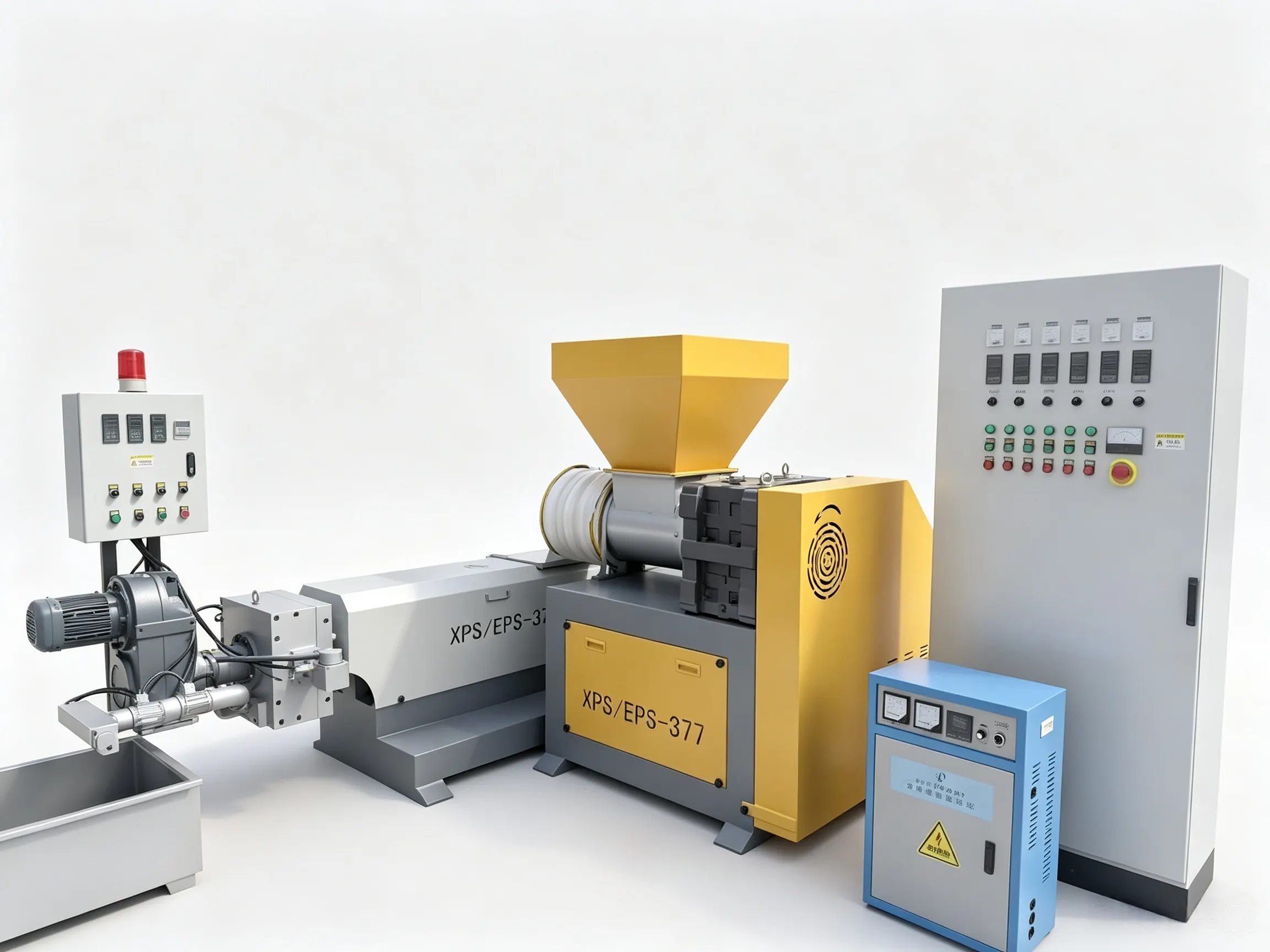
Type A Plastic Recycled Pelletizer
Plastic Waste Recycling Machine for Multi-Material Plastic Recycling
Green Earth's Type A plastic waste recycling machine is an industrial recycling and pelletizing system designed to convert suitable thermoplastic waste into reusable plastic pellets. The line can be configured for materials including PP, PE, PS and ABS according to the characteristics of the incoming waste and the required recycled pellet specifications.
The complete system integrates material sorting, crushing, washing, dehydration, drying, extrusion, melt filtration, pelletizing, cooling, screening and packaging. Its modular configuration allows plastic processors and recycling companies to select suitable equipment according to material type, contamination level, processing capacity and downstream application.
By recovering production scrap and suitable post-consumer plastic waste, the system helps manufacturers convert waste polymers into reusable feedstock for injection molding, extrusion and other plastic processing applications.
Materials Suitable for Recycling
Type A is designed for a range of thermoplastic waste streams rather than a single dedicated polymer. The equipment configuration can be adjusted according to material properties and processing requirements.
| Material | Typical Recyclable Feedstock |
|---|---|
| PP | Containers, production scrap and rigid plastic products |
| PE | Plastic film, containers and production waste |
| PS | Selected rigid PS products and industrial scrap |
| ABS | Selected industrial plastic components and production scrap |
Material suitability depends on polymer type, moisture, contamination, additives, melt flow characteristics and the required quality of the recycled pellets.
For projects focused specifically on polystyrene processing, Green Earth also provides a dedicated polystyrene pelletizing line for suitable PS recycling applications.
Plastic Waste Recycling Process
The production line uses a continuous processing configuration to prepare waste plastics for stable extrusion and pelletizing.
1. Sorting and Feeding
Waste plastics are sorted according to polymer type, size, color and contamination level. Manual sorting or an automatic sorting system can be selected according to the incoming material.
A controlled feeding system then transfers the sorted material into the preprocessing section.
2. Crushing and Size Reduction
A dedicated crusher reduces bulky plastic waste into smaller flakes or particles. Consistent particle size improves conveying, washing, drying and subsequent extrusion.
The crusher configuration can be selected according to the thickness, hardness and form of the incoming waste.
3. Washing and Contaminant Removal
The crushed plastic enters a cleaning system where surface dirt, labels, dust and other contaminants are removed.
Washing intensity and equipment configuration can be adjusted according to the contamination level of the feedstock.
4. Dehydration and Drying
After washing, centrifugal dehydration removes free water from the plastic flakes. A hot-air drying system then further reduces residual moisture before extrusion.
Effective moisture control helps improve melt stability and reduce processing problems during pelletizing.
5. Melting and Plasticizing
The dried plastic flakes are continuously fed into the extruder.
Controlled heating and screw shear gradually melt and homogenize the material. Depending on the polymer and required output, the system can use a single-screw or twin-screw extrusion configuration.
The extrusion system is designed to provide stable melt temperature and pressure throughout continuous production.
6. Melt Filtration
The molten polymer passes through a high-precision filtration system to remove remaining contaminants.
The filtration configuration can include:
- Hydraulic quick-change screen changer
- Automatic self-cleaning filter
- Fine filtration system
- Pressure monitoring
Continuous filtration helps reduce production interruptions and protects the downstream die and pelletizing system.
7. Pelletizing
After filtration, the molten plastic is extruded through a die plate and cut into uniform pellets.
Different pelletizing configurations can be selected according to polymer type and production requirements, including air-cooling, water-cooling and water-ring pelletizing systems.
8. Cooling and Screening
Freshly cut pellets are cooled and solidified before entering the screening system.
The vibrating screen separates oversized, undersized and defective particles from qualified recycled pellets. Rejected material can be collected and returned to the recycling process when appropriate.
9. Packaging
Qualified pellets are conveyed to an automatic packaging system.
The packaging configuration can support standard 25 kg bags or larger FIBC bulk bags according to transportation and storage requirements.
Core Equipment Configuration
The Type A system uses a modular equipment structure so that each processing stage can be configured according to the material and target output.
Raw Material Preparation System
The preprocessing section can include:
- Sorting equipment
- Plastic crusher
- High-pressure washing system
- Centrifugal dehydrator
- Hot-air dryer
- Material conveying system
The objective is to reduce particle size and remove contaminants and moisture before extrusion.
Extrusion and Melt Processing System
The extrusion section is the core of the recycling line. Single-screw or twin-screw extruders can be selected according to polymer characteristics, production capacity and required melt quality.
The system combines:
- Controlled heating
- Screw plasticization
- Melt homogenization
- Pressure control
- Melt filtration
- Optional vacuum degassing
Green Earth can also configure the recycling line with an industrial extrusion system according to the polymer, output requirements and downstream processing conditions.
Pelletizing and Cooling System
The pelletizing section converts the filtered polymer melt into reusable pellets.
Available configurations can include:
- Air-cooling pelletizing
- Water-cooling pelletizing
- Water-ring pelletizing
- Pellet cooling
- Dewatering
- Vibrating screening
- Finished pellet conveying
The selected configuration depends on the polymer's melt characteristics, pellet specifications and production requirements.
Key Features of the Plastic Recycling Pelletizer
Multi-Material Processing Capability
The recycled plastic pelletizer can be configured for different thermoplastic materials, helping recyclers process multiple compatible waste streams with an appropriate equipment setup.
Controlled Extrusion Temperature
The extruder uses segmented heating and cooling zones to maintain stable melt temperatures. Precise temperature management helps reduce thermal degradation and maintain consistent processing conditions.
Efficient Melt Filtration
Hydraulic quick-change screen changers and automatic filtration systems help remove contaminants from the polymer melt while reducing production interruptions caused by manual filter replacement.
Automated Process Control
A centralized PLC control system monitors major operating parameters, including:
- Screw speed
- Barrel temperature
- Melt pressure
- Die temperature
- Pelletizing speed
- Cooling conditions
The touchscreen interface provides centralized operation and process monitoring.
Wear-Resistant Extrusion Components
Screws and barrels can be manufactured from wear-resistant alloy materials and treated according to the processing requirements of different polymers.
The selected material and surface treatment help improve resistance to wear and corrosion during continuous recycling operations.
Flexible Pelletizing Configuration
The plastic recycling pelletizer can be configured with different cooling and pelletizing systems to accommodate different polymer characteristics and finished pellet requirements.
Recycled Plastic Pellet Quality
The quality of recycled pellets depends on the incoming waste, preprocessing efficiency, extrusion conditions and filtration performance.
The production line is designed to provide controlled:
| Pellet Quality Factor | Processing Control |
| Pellet size | Die and cutting configuration |
| Pellet shape | Selected pelletizing system |
| Moisture | Dehydration and drying |
| Contamination | Melt filtration |
| Melt stability | Temperature and pressure control |
| Material consistency | Controlled feeding and extrusion |
For projects with specific recycled pellet requirements, the equipment configuration can be adjusted according to target melt flow, moisture, contamination level, pellet size and downstream processing requirements.
Applications of Recycled Plastic Pellets
Recycled plastic pellets can be used in suitable downstream plastic processing applications when their physical and processing properties meet the requirements of the final product.
Injection Molding
Selected recycled PP, PE, PS and ABS pellets can be used for suitable non-food-contact injection molded products.
Plastic Extrusion
Recycled pellets can serve as feedstock for selected plastic profiles, pipes, sheets and other extrusion products.
Packaging Products
Suitable recycled materials can be incorporated into selected packaging applications according to material specifications and applicable regulations.
Construction Products
Selected recycled polymers can be processed into plastic profiles, pipes, fittings and other construction-related products.
Agricultural Plastic Products
Suitable recycled PP and PE materials can be used in selected agricultural plastic applications, depending on the required product properties.
The suitability of recycled pellets should be evaluated according to the material composition, contamination level, mechanical properties and requirements of the final product.
Environmental and Process Control
The recycling line can be equipped with centralized exhaust collection and treatment systems for volatile compounds generated during plastic processing.
A fully enclosed material transfer and processing configuration can also help reduce material leakage and dust release.
The final exhaust treatment and environmental configuration should be selected according to the processed polymer, production conditions and applicable local emission requirements.
Flexible Production Line Configuration
Not every plastic waste stream requires the same recycling process. Green Earth can configure the line according to:
- Polymer type
- Waste form
- Material contamination
- Moisture content
- Required production capacity
- Target pellet specifications
- Downstream application
- Factory layout
- Automation requirements
This approach allows the equipment configuration to focus on the actual characteristics of the customer's waste rather than using a fixed standard line for every application.
Green Earth Plastic Recycling Solutions
Green Earth provides equipment solutions covering plastic waste preparation, extrusion, melt filtration, pelletizing and downstream handling.
For customers working with broader polymer processing projects, Green Earth also supplies polymer processing equipment for industrial extrusion and related applications.
The equipment can be integrated into complete recycling and polymer processing projects according to production requirements, material characteristics and factory conditions.
Plastic Recycling Equipment FAQ
What materials can this plastic recycling machine process?
The Type A line can be configured for suitable thermoplastic waste materials including PP, PE, PS and ABS. The final configuration depends on the material characteristics and required recycled pellet specifications.
What is the difference between a plastic recycling machine and a plastic pelletizing machine?
A plastic recycling machine generally refers to the complete waste processing system, including crushing, washing, drying, extrusion and pelletizing. A plastic pelletizing machine focuses primarily on converting processed polymer melt into reusable pellets.
Can the line process different types of plastic?
Yes, but the equipment configuration should be selected according to polymer compatibility and processing requirements. Different materials may require different screw designs, temperature profiles, filtration systems and pelletizing configurations.
What pelletizing methods are available?
The system can be configured with air-cooling, water-cooling or water-ring pelletizing systems. The appropriate method depends on the polymer, melt characteristics, production capacity and required pellet specifications.
Can recycled pellets be used directly in injection molding?
Suitable recycled pellets can be used in downstream injection molding when their melt flow, contamination level, moisture and other material properties meet the requirements of the application.
Can the recycling line be customized?
Yes. Green Earth can customize the equipment configuration according to the incoming waste material, production capacity, target pellet quality, factory layout and downstream application.
Request a Plastic Recycling Pelletizing Solution
Green Earth supplies industrial plastic waste recycling machines for plastic processors and recycling companies looking to convert suitable waste plastics into reusable recycled pellets.
Provide your waste material type, estimated capacity and target pellet application to receive a suitable recycling and pelletizing equipment configuration.