

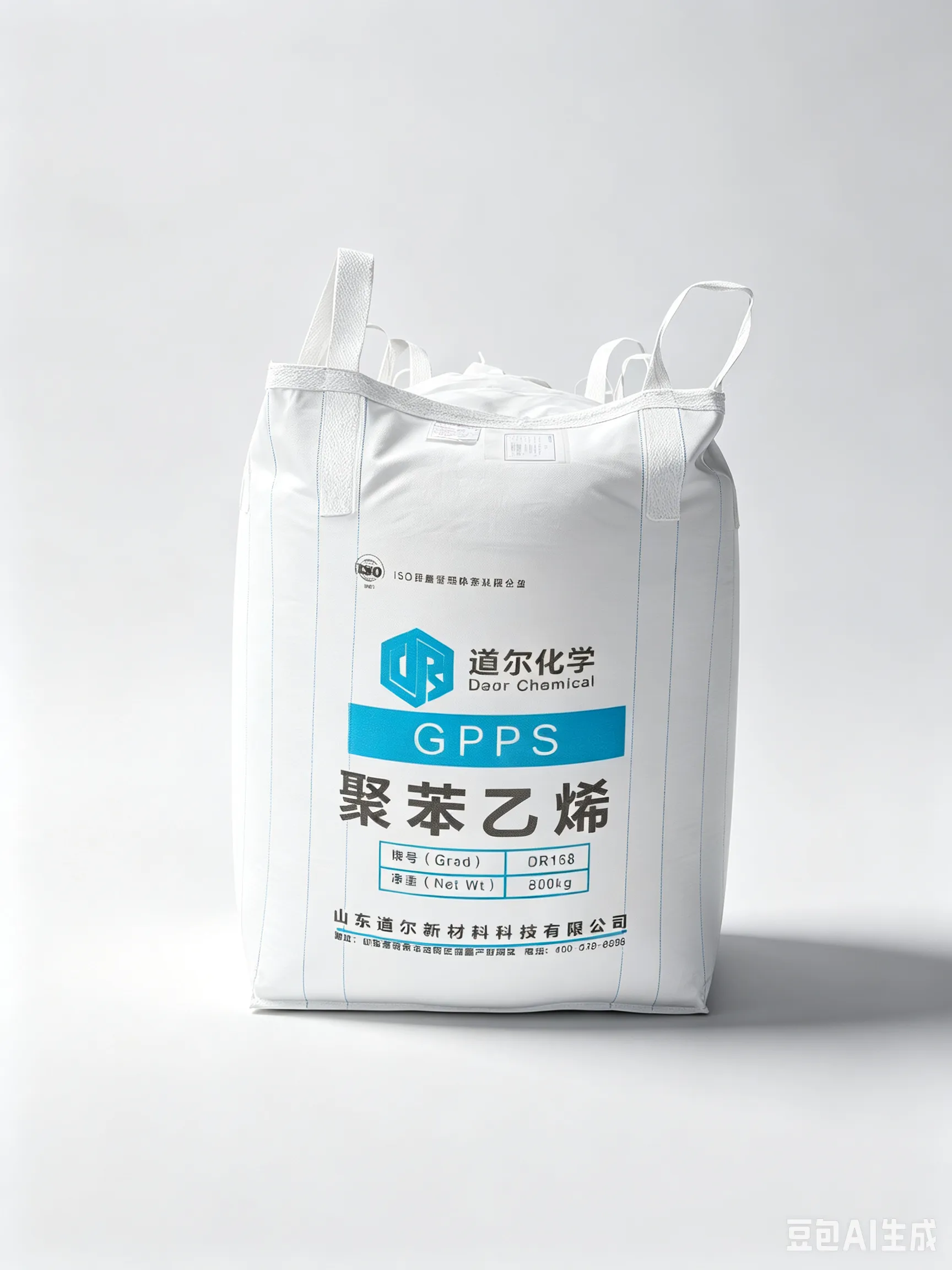


High Gloss GPPS Raw Material
Product Overview
Virgin GPPS resin is a high-purity general-purpose polystyrene resin designed for manufacturers requiring high transparency, stable processing performance and consistent physical properties.
Produced from high-purity styrene monomer through continuous polymerization, GPPS resin combines excellent clarity, rigidity, surface hardness and melt processability. It is suitable for injection molding, extrusion and thermoforming applications across packaging, XPS insulation, lighting, consumer products and other plastic processing industries.
Green Earth supplies injection grade GPPS polymer applications, with resin grades configurable according to melt flow, transparency, processing conditions and end-product requirements.
For processors seeking a balance between appearance, processing efficiency and material consistency, GPPS provides a reliable virgin resin solution for large-volume industrial production.
Key Advantages of GPPS Resin
High Transparency and Gloss
GPPS resin offers excellent optical clarity and a high-gloss surface, making it suitable for transparent plastic products where appearance is an important performance requirement.
The resin can deliver high light transmission and clear finished products without relying on excessive optical additives or colorants.
Excellent Processing Performance
The resin has good melt flow and processing stability, supporting efficient injection molding, extrusion and thermoforming.
Its processing characteristics allow manufacturers to achieve consistent filling, stable molding cycles and accurate product dimensions.
Stable Rigidity and Dimensional Performance
GPPS provides high rigidity, surface hardness and good dimensional stability.
These properties make it suitable for products that require a firm structure and stable shape during storage, transportation and end use.
Consistent Melt Flow
Stable melt flow is important for automated plastic processing.
Green Earth's GPPS grades can be specified according to downstream processing requirements, helping manufacturers maintain consistent extrusion and injection molding conditions across production batches.
Food-Contact Grades Available
Selected GPPS grades can be produced to meet applicable food-contact requirements according to the target market and application.
Customers should confirm the required regulatory standard, product grade and end-use conditions before purchasing.
Broad Compatibility
GPPS can be used independently or combined with compatible styrenic materials for specific formulation requirements.
Its compatibility with common styrenic polymers provides processors with additional flexibility when developing customized material formulations.
GPPS Resin Grades
Green Earth can provide different GPPS configurations according to processing method and final application.
| GPPS Grade | Primary Application | Key Requirement |
|---|---|---|
| Injection Grade GPPS | Injection molding | Stable melt flow and dimensional accuracy |
| Extrusion Grade GPPS | Extrusion processing | Stable melt strength and continuous processing |
| XPS Grade GPPS | XPS insulation boards | Consistent extrusion performance |
| Transparent Packaging Grade | Food and general packaging | High clarity and stable processing |
| Optical / Lighting Grade | Lighting components | High transparency and surface quality |
Final specifications can be adjusted according to customer processing equipment and product requirements.
Production Process
The GPPS manufacturing process uses continuous bulk polymerization followed by devolatilization, extrusion and pelletizing.
1. Styrene Monomer Polymerization
High-purity styrene monomer is accurately metered into the continuous polymerization system.
A series of reactors provides controlled reaction conditions for converting styrene monomer into polystyrene.
Reaction temperature, pressure, feed rate and residence time are monitored throughout the process to maintain stable polymer quality.
2. Melt Devolatilization
The polymer melt contains residual monomer and volatile components after polymerization.
A multi-stage vacuum devolatilization system removes these components before downstream extrusion and pelletizing.
Effective devolatilization helps improve resin stability and reduces residual volatile content.
3. Melt Processing and Filtration
The devolatilized polymer melt is transferred to the extrusion section for homogenization and filtration.
Controlled melt temperature and pressure help maintain uniform material flow while the filtration system removes unwanted solid contaminants.
4. Strand Pelletizing
The filtered polymer melt passes through a die plate to form continuous strands.
The strands are cooled in a circulating water system before entering the pelletizer, where they are cut into uniform cylindrical pellets.
5. Cooling and Screening
The newly formed pellets are cooled and dewatered before entering a vibrating screening system.
Oversized, undersized or irregular pellets are separated to maintain consistent finished-product quality.
6. Packaging and Storage
Qualified GPPS pellets are automatically transferred to the packaging system.
Typical packaging options include 25 kg bags and 500–1,000 kg FIBC bulk bags. Finished resin should be stored in a dry, ventilated environment away from excessive heat and direct sunlight.
Technical Characteristics
The main technical characteristics of Green Earth GPPS include:
- High transparency and surface gloss
- High rigidity and surface hardness
- Stable melt flow performance
- Good dimensional stability
- Low molding shrinkage
- Good injection molding performance
- Good extrusion performance
- Excellent thermoforming characteristics
- Consistent pellet size
- Stable batch-to-batch quality
- Customizable processing grades
These characteristics make GPPS suitable for both high-volume commodity applications and selected products requiring controlled appearance and processing performance.
Injection Grade GPPS Polymer
Injection grade GPPS polymer is designed for plastic processors using injection molding equipment.
The material provides stable melt flow and good cavity filling performance, helping manufacturers produce transparent and rigid molded products with consistent dimensions.
Typical applications include:
- Transparent containers
- Cosmetic packaging
- Stationery
- Consumer goods
- Electronic packaging components
- Transparent household products
- Display and decorative components
Injection grade specifications can be selected according to product thickness, mold design, cycle time and processing temperature.
Extrusion Grade GPPS for XPS
Extrusion grade GPPS for XPS is formulated for downstream extrusion processing where stable melt behavior and consistent material properties are essential.
GPPS is a key polymer material used in XPS insulation board production. Its processing characteristics influence extrusion stability, cell structure and finished-board performance.
For XPS manufacturers, resin selection should consider:
- Melt flow characteristics
- Molecular weight distribution
- Purity
- Residual volatile content
- Processing temperature
- Foaming system compatibility
- Required board density
- Target compressive strength
Green Earth can coordinate GPPS material requirements with downstream XPS extrusion and processing conditions.
High Gloss GPPS Raw Material
High Gloss GPPS Raw Material is suitable for applications where surface appearance is an important purchasing criterion.
Its high clarity and surface gloss can support the production of transparent or visually demanding plastic products.
Typical applications include transparent packaging, display components, lighting accessories and consumer products.
For large-volume buyers, stable resin quality is particularly important because variations in melt flow, purity or optical performance can affect production efficiency and finished-product appearance.
Main Applications
XPS Insulation Board Production
GPPS is widely used as a polymer feedstock for XPS extrusion lines.
It is processed together with a suitable foaming system and additives to produce rigid extruded polystyrene insulation boards for building and industrial insulation applications.
Food Packaging
Selected GPPS grades can be used for transparent food containers, cups, trays and packaging components where the required food-contact compliance has been confirmed.
Cosmetic Packaging
Its transparency, rigidity and surface gloss make GPPS suitable for cosmetic boxes, containers and other transparent packaging components.
Electronic Packaging
GPPS can be processed into protective trays, packaging inserts and other rigid plastic components used for electronic products.
Stationery and Consumer Products
The resin is suitable for transparent stationery, storage products, household items and decorative plastic components.
Lighting and Optical Components
High-clarity GPPS grades can be used for selected lighting covers, diffusion components and other transparent plastic parts.